Shishuvan School's E-Waste Awakening
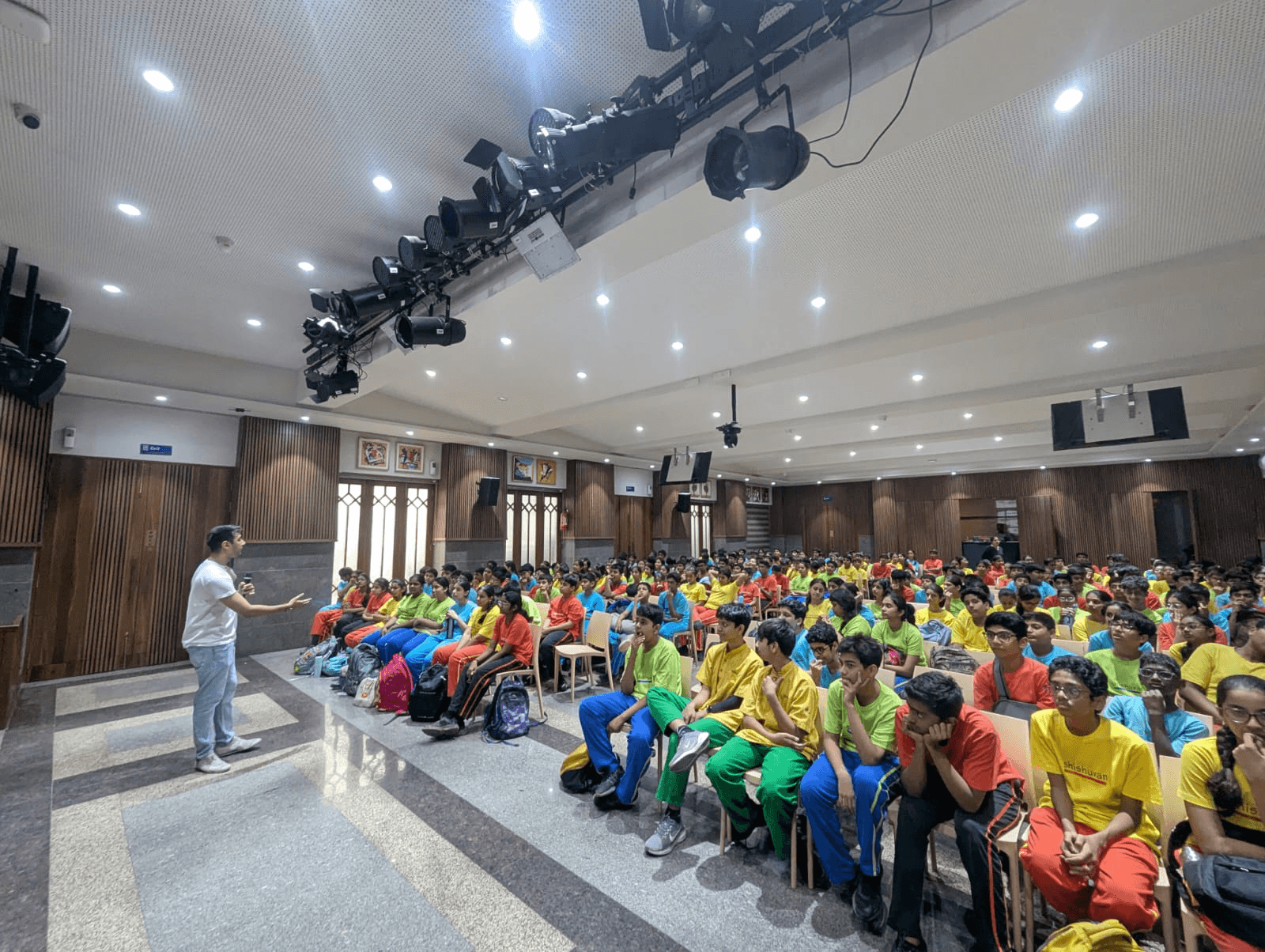
When 800+ Young Minds Discover the Hidden Treasure in Their Drawers: Shishuvan School's E-Waste Awakening
Last month, we walked into Shishuvan School in Matunga with a simple mission: help the next generation understand that e-waste isn't just garbage. It's a systemic opportunity disguised as discarded electronics.
What happened over the next few hours transformed how over 800 students, from Grade 4 through Grade 9, think about the devices in their hands.
The Problem No One Talks About (Until Now)
Every student in that auditorium owns a phone. Most have laptops. Nearly all have seen old devices languish in drawers and closets at home. But here's what they didn't know: that dead smartphone contains more gold than some mines. That broken laptop holds precious metals worth recovering. That old tablet? It's urban ore waiting to be mined.
India generates 6.19 million metric tonnes of e-waste annually and that number is growing by 16.9% every year. By 2030, we'll be managing 14 million metric tonnes. These aren't abstract statistics. They're the devices these 800 students will discard in their lifetimes.
The question we posed wasn't rhetorical: What happens to your e-waste?
From Confusion to Clarity: Understanding the Hidden Treasures
We didn't just lecture. We showed them.
Inside every smartphone: copper, gold, silver, rare earth elements. Inside every laptop: aluminum, cobalt, tantalum. Inside every circuit board: materials so valuable that informal recyclers risk their health extracting them without proper equipment or safeguards.
The auditorium went quiet. Then the hands went up.
Students realized something profound: e-waste isn't pollution. It's a resource in the wrong place.
We walked them through the journey of a discarded device. What happens when it ends up in informal, unregulated recycling operations versus formal, certified channels. The difference was stark:
Informal recycling: Hazardous materials leach into soil and groundwater. Workers handle toxic substances without protection. Valuable materials are lost. Communities bear the health cost.
Formal recycling: Materials are recovered safely. Workers are protected. Supply chains remain intact. The circular economy actually works.
For the first time, these students understood that where you recycle matters as much as whether you recycle.
Interactive Engagement: Learning Through Play
Theory only goes so far with Grade 4 through Grade 9 students. So we gamified it.
We divided them into groups and posed a challenge: Identify the most end-of-use electronic items. Phones, headphones, chargers, gaming consoles, old cameras, broken speakers—the competition was fierce. Hands shot up. Groups huddled. The energy was palpable.
What started as a game became a deeper conversation: Why do we accumulate so many devices? What's our responsibility?
Students began connecting dots they'd never connected before. Technology isn't disposable. It's cyclical. And they have agency in that cycle.
The Careers Nobody Told Them About
We shared something the school curriculum doesn't always highlight: there are thriving, meaningful careers in sustainability and circular economy management.
From material scientists designing better recycling processes, to logistics engineers optimizing collection networks, to data analysts tracking supply chains; sustainability isn't a side issue. It's becoming the backbone of global commerce.
We watched students' eyes light up. Career possibilities they'd never considered suddenly became tangible.
Our Process: Making Circularity Visible
We pulled back the curtain on what Elevaste actually does:
Collection: Secure, accessible pickup from homes, schools, and businesses
Data Destruction: HIPAA-equivalent standards ensuring personal information is permanently eliminated
Disassembly & Sorting: Separating materials by type and composition
Recovery & Refurbishment: Extracting valuable materials; refurbishing devices for reuse
Reintegration: Recovered materials flow back into manufacturing supply chains
The students saw the full loop. Not waste. Regeneration.
The Call to Action: From Awareness to Impact
The final segment was the most important: How can you be part of the circular economy?
We gave them tangible, age-appropriate actions:
At home: Start a family e-waste collection drive. Sort devices by type. Learn what's recyclable.
At school: Advocate for a certified e-waste collection program. Educate peers. Lead by example.
In your community: Organize awareness sessions. Show others that e-waste recovery is everyone's responsibility.
We emphasized something critical: You don't need to work in sustainability to drive change. You just need to make one better choice at a time.
Why This Matters
800 students walked out of that auditorium with a fundamentally different understanding of technology and responsibility. More importantly, they became vectors of change in their families and communities.
If each of these students influences just 5 people around them; parents, siblings, friends. We've reached 4,000 decision-makers. If those 4,000 people make one better choice about e-waste disposal, the impact multiplies exponentially.
This is how circular economies are built. Not through regulation alone, but through awareness that transforms consciousness into action.
Shishuvan School didn't just host an e-waste awareness session. They catalyzed a generation of conscious consumers and future leaders who will define how India manages its digital transition.
What's Next?
Schools across Mumbai, across India, are waking up to this responsibility. If your institution is ready to bring this awareness to your students, we're here.
Because the future of our circular economy depends on the choices today's students make tomorrow.
Ready to bring e-waste awareness to your school? Contact Elevaste. We're building a generation of sustainability champions, one auditorium at a time.